
Retail
Shop-window LED screen: how do you assess brightness?
A shop window may look convincing in a photograph and become difficult to read at another time of day. Before selecting a brightness specification, observe light, reflections and how passers-by view your message.
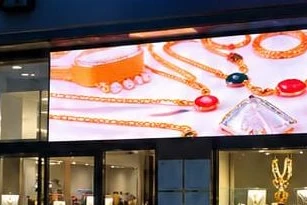
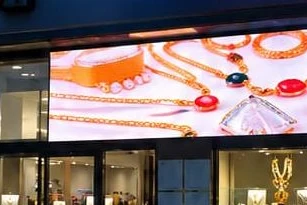
Start with a shop-window survey
Observe the façade during the hours when your communication matters. Look from outside, from approach routes and from the opposite side. Note which glass areas reflect the sky, buildings or lighting. Looking only from indoors does not describe the audience's viewing conditions.
Take consistent shop-window photographs that retain the context around the proposed screen. The aim is to explain situations requiring assessment, rather than produce an instrument measurement. State the times and conditions of the photographs to prevent approximate interpretations.
Separate brightness from a readable message
A very bright image is not necessarily a good message. Information that is too small, insufficient contrast or busy animation may remain hard to understand. Brightness should therefore not compensate for composition that ignores viewing distance.
Prepare a campaign example with a short title, main visual and useful information. Test this hierarchy in the actual planned format. The audience should understand the essentials without waiting through an entire sequence or searching for a secondary line among numerous elements.
Account for glazing and screen placement
Position behind the glass affects reflections and perception. Ask how installation will fit within the available depth and how servicing will remain possible. The project should preserve the use of the shop window and nearby equipment.
A screen directly exposed outdoors and one behind glass are different configurations. Equipment specifications and operating conditions must be confirmed for the site. Do not move a solution between environments based solely on visual resemblance.
Plan adjustments during operation
Daylight and opening hours change viewing conditions. Ask which settings are available and how they are applied. You need to know who can control playback and parameters, and under which instructions.
Automatic or remote functions are not assumed present. They must be documented for the proposed product. Plan a simple procedure to restore approved settings and stop inappropriate content. A configuration understood by the team is preferable to a complex function with no assigned owner.
Use a demonstration that resembles your needs
Highly saturated video does not assess a text-based message. Request a demonstration with a file close to your content and observe it from the selected viewpoints. Comparison should retain the same intention and comparable conditions.
Record unresolved questions: resolution, usable format, media management and maintenance access. This record helps select a reasoned proposal. The aim is to check the display's suitability for the message, rather than promise increased footfall or quantified commercial results.
Content example: an offer understood while passing
Imagine a shop window announcing a service and how to access it. A first version might combine several photographs, lines of text and detailed conditions. A second might retain the main service and one action. Compare them from the intended viewing position rather than the desk where they were created.
This exercise does not measure commercial results. It checks what the screen can actually communicate to passers-by. Secondary information can appear on another medium or in another sequence. Good hierarchy limits the need to compensate for a crowded message with an ever larger or brighter screen.
Prepare acceptance with the shop team
At commissioning, the responsible person should know how to find approved content, change it and restore agreed settings. Specify the files to retain and access credentials to hand over. If several colleagues are involved, a common procedure prevents losing the correct campaign version.
Review the result under the conditions documented initially. Note what matches the quote and what needs correction. Shared observation of format, content and environment provides a more useful acceptance basis than simply saying “the picture looks good”.
What to provide for the quote
Present the city, exposure, dimensions and photographs taken at relevant times. Specify content, update frequency and who will manage it. If you already have a supporting structure or playback system, state its reference without assuming compatibility.
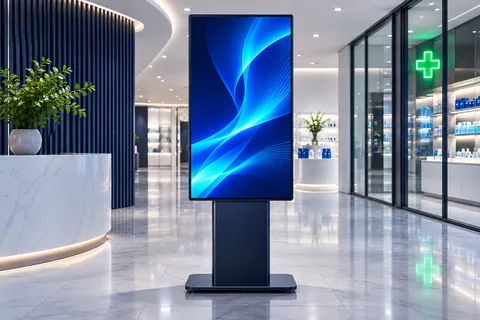
Price on quotation. Ask for the screen, integration, commissioning and support to be itemised. Warranties and lead times remain subject to written confirmation. A totem can also be assessed for a freestanding position on the visitor route; compare it according to the setting rather than a format preference.
Points to check
- Observe the shop window from the audience's viewpoint.
- Document reflections and changes in light.
- Test the actual type of content.
- Confirm settings, control and maintenance.
Frequently asked questions
Your questions, practical answers
Is a night photograph enough to choose?
No, it does not represent daytime viewing conditions. Document the situations that matter for your shop.
Should brightness stay high all the time?
Settings should suit the location and operating hours. Scheduling capabilities must be confirmed for the selected system.
Explore further
Compare uses and prepare your choice.
From advice to a quote
Compare project cost items and describe your location before submitting your request.
View pricing and the buying guide →Let’s discuss your project
Make room
for your ideas.
Describe your location and intended use. LED DISPLAY helps you identify solutions suited to your project.
Dimensions, use, city: the right details for a practical discussion.
Understand how your data is used →