Our solutions
Indoor LED wall: a large format that respects your space
In a lobby, room or presentation space, viewers may look at the screen at close range. An indoor LED wall should combine suitable resolution, careful integration and straightforward content management.
Configure my LED screen ↗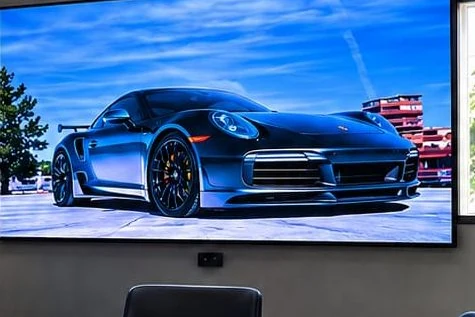
Start with the experience in the room
Identify the main uses: welcoming visitors, presenting a brand, supporting a conference or displaying artistic content. Format selection should account for furniture, circulation and typical audience positions. A screen that dominates the space or is mounted too high can reduce viewing comfort.
Measure distances from the nearest and farthest viewing positions. Observe ambient light and possible reflections. This information prepares the discussion about resolution and settings; it is more useful than an enquiry based solely on the largest possible diagonal.
Useful resolution depends on content
A text presentation, video feed and decorative image require different levels of detail. Relate pixel pitch to viewing distance and the most demanding content. Test a representative example rather than a spectacular demonstration unrelated to your use.
Final resolution depends on the wall layout and selected modules. Request exact dimensions, usable format and file requirements. No pitch or refresh-rate figure is confirmed here: it must come from the proposed product's technical data sheet.
Integrate the wall with the building and control system
The supporting structure, power supply and maintenance must be planned alongside the room layout. A recessed installation and a wall mounted in front of an existing surface create different access constraints. Ask how servicing will be possible after the work is complete.
If several sources are used, describe them: a presentation computer, media player or event control system. Compatibility, connections and processing functions must be confirmed within the project. A permanent indoor wall and an event rental should be the subject of separate enquiries.
Organise daily operation
Assign the person who prepares, approves and starts the content. They should know the file format, display system operation and procedure for returning to simple content. Documenting these steps reduces reliance on a single person during a presentation.
Training, software, any licences and maintenance must be specified in the proposal. It is also useful to agree brightness settings and operating hours suited to the room. No recurring service is considered included without written confirmation.
Information for a comparable proposal
Price on quotation. State the available area's dimensions, viewing distances and priority content. Include the sources to connect, mounting type and any site-work constraints. Request an itemised breakdown of equipment, installation, control and support.
Warranty and lead times remain subject to confirmation. For an occasional need, event rental may be more appropriate than permanent equipment; compare your actual schedule and usage, without assuming quantified returns or savings.
Frequently asked questions
Your questions, practical answers
Can an indoor wall display presentations?
The wall's resolution, audience viewing distance and source compatibility must be checked. A test with a real presentation is more useful than a demonstration video alone.
Can the wall be integrated into cladding?
The cladding must respect technical requirements and maintenance access. Its design and cost should appear in the project scope.
Buy or rent for a room?
Permanent use and an occasional need cannot be compared on equipment alone. Present your usage frequency and schedule to assess both options.
Explore further
Compare uses and prepare your choice.
Your project, your location
Your LED display in Morocco
A guide to complete your brief
Explore selection and organisation questions before requesting a proposal.
Read the related guide →Let’s discuss your project
Make room
for your ideas.
Describe your location and intended use. LED DISPLAY helps you identify solutions suited to your project.
Dimensions, use, city: the right details for a practical discussion.
Understand how your data is used →